


Custom apparel development usually becomes inefficient long before the garment is sewn. The real problem starts when the body is simplified too early. A few manual measurements may be enough to choose a rough size, but they often fall short when the goal is a garment that fits cleanly, drapes properly, and can be repeated with confidence. Once the starting body data is incomplete, pattern work becomes less stable, sample rounds multiply, and fit corrections start absorbing time that should have been spent refining the product itself.
That is why 3D body scanning has become increasingly relevant in custom apparel. It gives apparel teams a more complete digital reference of the wearer, including body shape, proportion, posture, and geometry that traditional measuring methods tend to miss. In custom development, that changes the quality of decisions across fit, prototyping, digital simulation, and production planning.
Why body scanning is more useful than basic measurements in custom apparel
In custom clothing, two people can have very similar chest, waist, and hip measurements but still require different garment adjustments. Shoulder slope, torso depth, stance, asymmetry, and the way body volume is distributed all affect how a garment fits in practice.
This is where 3D body scanning becomes more useful than a tape measure alone. Instead of reducing the wearer to isolated numbers, it preserves the body as a three dimensional form. That gives technical designers, pattern makers, and product developers a stronger reference when they need to adjust block patterns, assess balance, or prepare garments for made to measure production.
It also helps reduce one of the most common problems in custom apparel: relying on measurements that appear correct on paper but fail once the garment is worn.
How 3D body scanners support custom apparel development in practice
The strongest value of a 3D body scanner is not the scan file by itself. The value comes from how the body data improves downstream work.
In practice, scanned body data can support:
· more accurate fit analysis
· pattern refinement based on actual body shape
· fewer physical sampling corrections
· better digital garment simulation
· more consistent repeat orders
· stronger virtual try on foundations
· more efficient made to measure workflows
That is why body scanning is increasingly connected to bespoke tailoring, uniforms, premium apparel, sportswear, adaptive clothing, and digital fashion systems. The better the body input, the more stable the workflow after it.

Where fit accuracy actually improves
Fit accuracy improves when apparel teams can work from more than circumference data alone. A body scan helps reveal details that often shape fit outcomes, such as:
· shoulder angle
· back curvature
· torso thickness
· hip prominence
· posture differences
· left-right asymmetry
· body depth and distribution
These factors influence how collars sit, how sleeves hang, how waist shaping behaves, and how garments drape through movement and standing posture. In other words, the scan helps teams understand why a garment may need adjustment before that issue becomes visible in a finished sample.
Using Revopoint POP 4 to capture the body as a more useful apparel reference
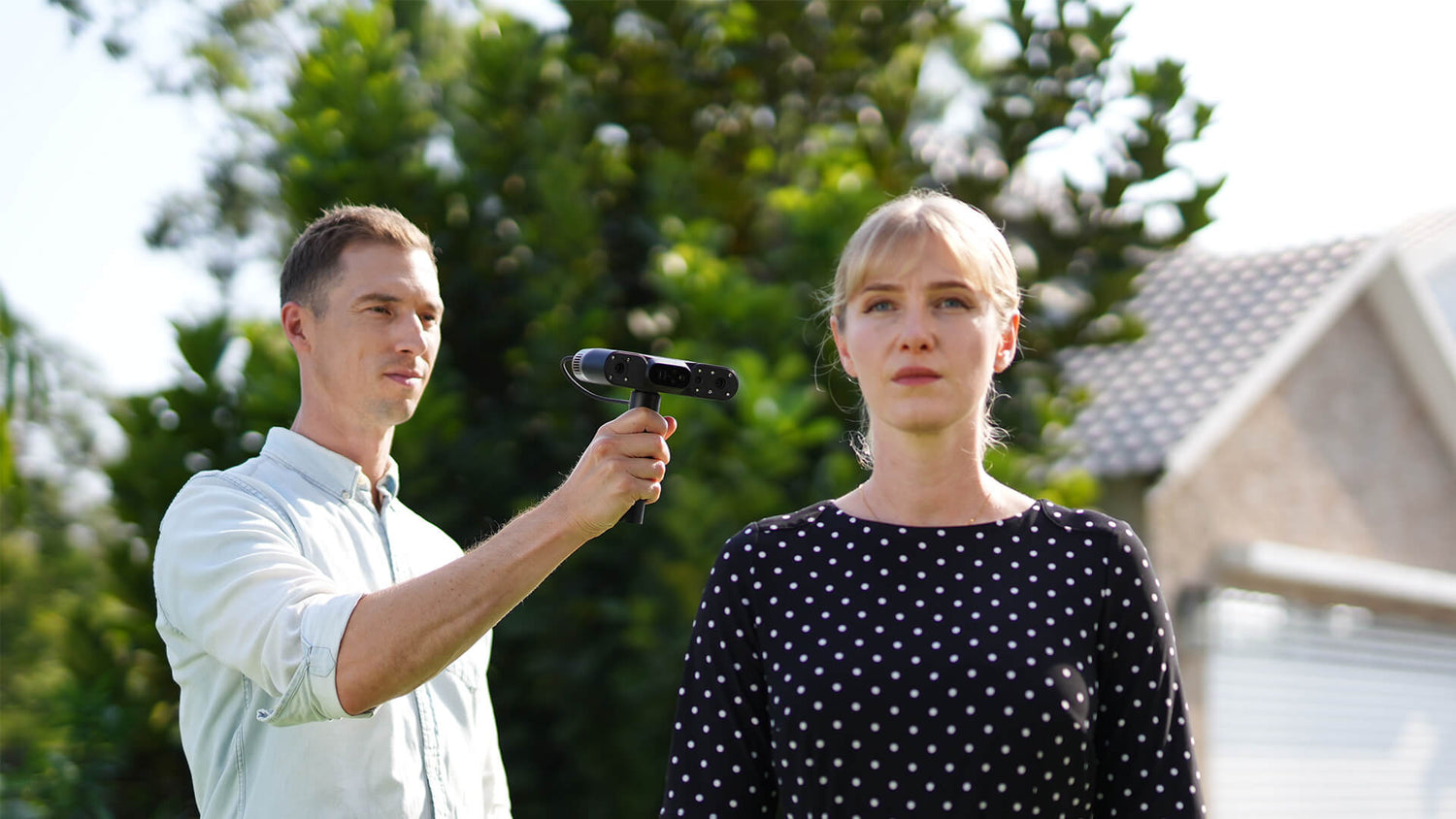
This is where Revopoint POP 4 becomes a practical example of how body scanning supports custom apparel development. POP 4 is useful because it gives apparel teams a portable way to build a stronger body reference for development work while maintaining a workflow that is realistic for studios, fitting rooms, sample teams, and mobile capture setups.

POP 4 is a wireless hybrid 3D scanner that combines blue multi-line laser, near-infrared full-field structured light, and VCSEL full-field structured light. In apparel-related scanning, that hybrid system matters because different body capture scenarios do not always behave the same way. Some workflows need stronger geometry detail, some need flexible lighting performance, and some need easier human-body capture across varied surfaces and environments. POP 4 gives teams more options for handling those different conditions within one scanner.
It also features five scanning modes, which is relevant in custom apparel environments where the use case may shift from scanning a person for fit reference to scanning mannequins, dress forms, soft prototypes, accessories, or wearable product samples. That broader flexibility helps make the scanner more useful across the full development process rather than limiting it to one narrow task.
For teams building body-based apparel workflows, the point is not only that POP 4 can scan a person. The point is that it creates a more credible digital body reference that can support better garment decisions afterward.
How POP 4 helps reduce guesswork during pattern refinement
One of the biggest sources of inefficiency in custom apparel is pattern correction after the first sample. This usually happens when the original measurements were technically complete but structurally incomplete. The numbers may be accurate, yet the pattern still fails to account for posture, silhouette, or body depth.
Using POP 4 as part of the workflow can help reduce that guesswork. Its capture system supports volumetric accuracy of 0.03 mm + 0.05 mm × L (m), which is useful when apparel teams need more dependable geometry as a design reference. In practice, this gives pattern makers and technical designers a more stable starting point for evaluating balance, shaping, and proportional distribution instead of relying on estimation between measurement points.
POP 4 supports full-field structured light scanning at up to 5,000,000 Points/s, which helps make body capture more efficient in workflows where speed matters. In apparel settings, faster capture can be helpful because body scanning is affected by micro-movements, posture shifts, and the practical reality that a subject cannot always hold a perfect static pose for long. More efficient capture improves the chance of getting a usable body reference with less friction.
Pattern makers can then better understand where a garment may need redistribution of ease, length balancing, or silhouette adjustment before committing to repeated sample revisions.
This is especially useful in categories like:
· made to measure suiting
· dresses with body-contoured shaping
· performance apparel
· uniforms that need repeatable fit standards
· fashion prototypes built around real human form rather than generic size blocks
In these cases, POP 4 supports the workflow by making the body easier to evaluate as a full shape, not just a measurement table.
How POP 4 fits into digital apparel and virtual fitting workflows
Custom apparel development is no longer limited to physical fitting alone. More teams now rely on digital garment development, 3D visualization, avatar workflows, and virtual fit presentation before final production decisions are made.
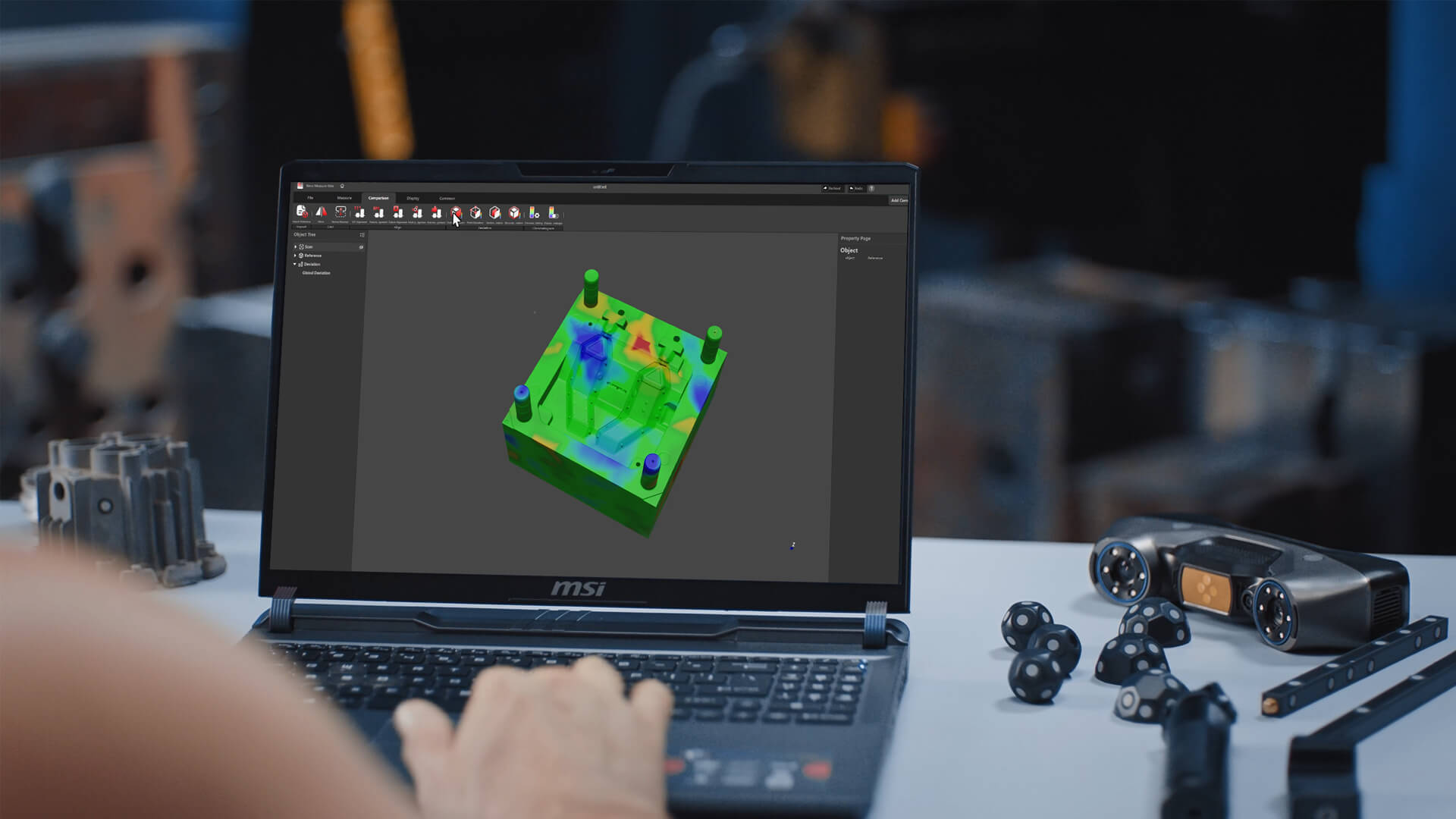
POP 4 is relevant here because the scan can become a usable starting point for those digital processes. It supports color scanning and AI object segmentation, which can help streamline preparation when teams need cleaner separation between the subject and surrounding environment for downstream digital work. In apparel development, that matters because the body asset may need to move into simulation, visual review, or ecommerce-related presentation without spending unnecessary time on manual cleanup.
Its hybrid HD workflow also makes it better suited to teams that want one scanner to cover both human-form capture and broader creative or technical scanning tasks. That is useful in digital fashion pipelines, where the same team may move between body references, wearable products, mannequin forms, and visual content production.
When the underlying body model is more believable, virtual fit review becomes more useful. Garment drape, silhouette behavior, and overall visual confidence all depend on the body input being strong enough to support the simulation.
How POP 4 supports flexible apparel workflows across environments
Another reason POP 4 matters in this context is portability. Not every apparel business works with a permanent full-body scanning booth or a fixed technical environment. Tailoring studios, product development teams, educational programs, small fashion brands, and wearable design teams often need something more adaptable.

POP 4 supports Wi-Fi 6 connectivity and a portable workflow, which makes it easier to capture body and product references across studios, showrooms, fitting areas, and development spaces. It also supports outdoor scanning up to 100,000 lux, which is useful when teams are working in brighter commercial environments rather than tightly controlled scanning rooms.
That practical flexibility often determines whether scanning becomes a repeatable part of custom apparel development or remains an occasional experiment. A scanner that can move more easily with the workflow is often more valuable than a technically capable system that is too rigid for day-to-day use.
What apparel teams should focus on when using body scans
Even with a capable scanner, the body scan should still be treated as part of an apparel process, not a standalone output. The most useful results usually come when teams:
· scan with a clear fit objective in mind
· standardize subject clothing and pose
· focus on shape areas that affect garment balance and ease
· use scan data to support pattern logic, not replace it
· connect the body model to fitting, simulation, or repeat-order workflows
This approach keeps the scan tied to the real purpose of custom apparel development, which is a better garment outcome.
Conclusion
3D body scanners support custom apparel development because they improve the quality of the starting body reference. That helps apparel teams make better fit decisions, reduce unnecessary correction cycles, and build more reliable custom workflows across physical and digital production.
The most important shift is not just that the body can be scanned. It is that the scan can be used to improve pattern refinement, fit logic, and garment visualization in a more structured way.
For apparel teams that want a more flexible way to bring body scanning into everyday development work, Revopoint POP 4 is a practical option to consider. It fits especially well when the goal is to strengthen fit evaluation, support digital apparel workflows, and make custom development more efficient without forcing the process into a fixed scanning setup.


Leave a comment
This site is protected by hCaptcha and the hCaptcha Privacy Policy and Terms of Service apply.